Last Updated: September 3, 2026
Ever since KRAFTON confirmed BGMI Lite was in development, one question has come up more than almost any other: what kind of phone will you actually need to run it? That question now has a real answer. KRAFTON has officially confirmed BGMI Lite’s minimum GPU and RAM requirements through its official channels. Here’s the complete, fact-checked breakdown.
BGMI Lite Official Minimum Requirements
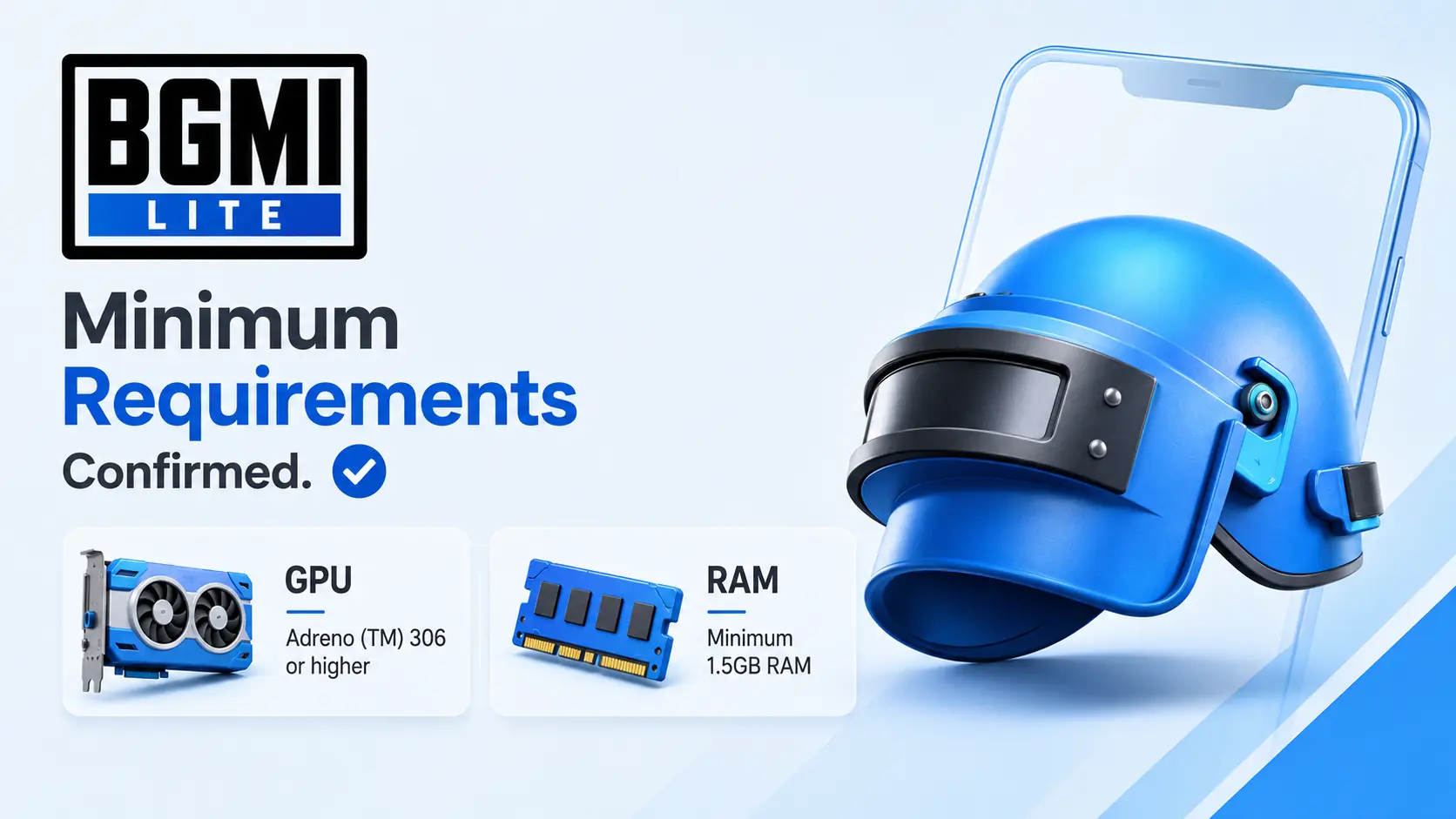
KRAFTON has confirmed the following minimum requirements for BGMI Lite through its official BGMI Lite channels:
- GPU: Adreno (TM) 306 or higher
- RAM: Minimum 1.5GB
This is the first time KRAFTON has released concrete hardware specifications for BGMI Lite, following weeks of only confirming the app’s approximate download size and pre-registration details. For context, the Adreno 306 is a GPU found in older, entry-level Qualcomm Snapdragon chipsets (such as the Snapdragon 410 series), reinforcing that BGMI Lite is genuinely targeting budget and older Android devices rather than just trimming the app’s download size while keeping steep hardware demands.
What Hasn’t Been Confirmed Yet
While GPU and RAM minimums are now official, KRAFTON has not yet released the following:
- Minimum or recommended processor (CPU) specifications
- Minimum Android OS version required
- Recommended specifications for smoother performance (as opposed to bare minimum)
- Final installed storage size after in-game resources are downloaded
Why This Matters for Readers
Only the minimum GPU and RAM have been officially confirmed so far — everything else (processor, Android version, recommended specs, final storage size) is still unannounced. You may come across articles or videos online claiming to list full “confirmed” specifications, including processor models or exact storage figures. Treat anything beyond the GPU and RAM figures above with caution unless it’s sourced directly to a KRAFTON statement, the official BGMI Lite Instagram or YouTube page, or the game’s actual Play Store listing.
What KRAFTON Has Said About the Goal of BGMI Lite
While exact numbers haven’t been shared, KRAFTON’s own messaging gives some directional insight. The company has described BGMI Lite as a way of expanding accessibility to players on lower-end devices and slower networks, positioning it as a lighter alternative built specifically for budget and older Android phones that currently struggle with the standard app. The clear intent is to reduce hardware demands compared to regular BGMI — but KRAFTON has stopped short of publishing the actual thresholds.
Standard BGMI Requirements (For Comparison)
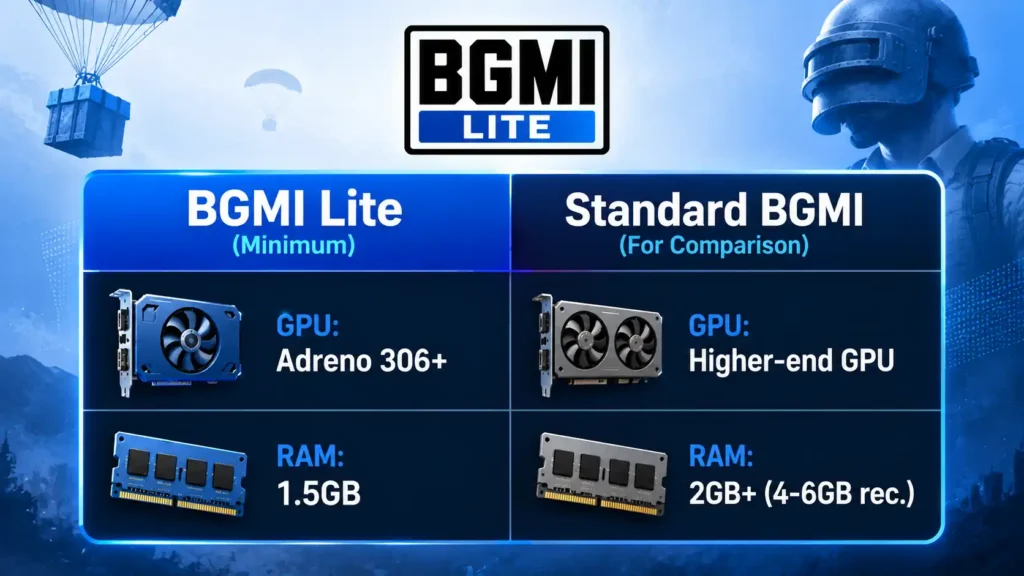
Now that BGMI Lite’s minimum requirements are known, the gap versus standard BGMI is clear. Standard BGMI requires at least 2GB of RAM, with 4GB or 6GB recommended for smoother performance, along with roughly 2GB to 5GB of storage depending on device and installed resources. BGMI Lite’s confirmed minimum of 1.5GB RAM sits meaningfully below that baseline, opening the game up to devices that couldn’t reliably run standard BGMI at all.
What We Can Learn From PUBG Mobile Lite (Historical Reference Only)
Some players are looking back at PUBG Mobile Lite — the earlier lightweight PUBG Mobile version that was available in India before the 2020 ban — as a rough indicator of what a “Lite” build might look like. PUBG Mobile Lite debuted in July 2019, was designed for entry-level Android devices with limited RAM and storage, and still ran on Unreal Engine 4 despite being a trimmed-down build.
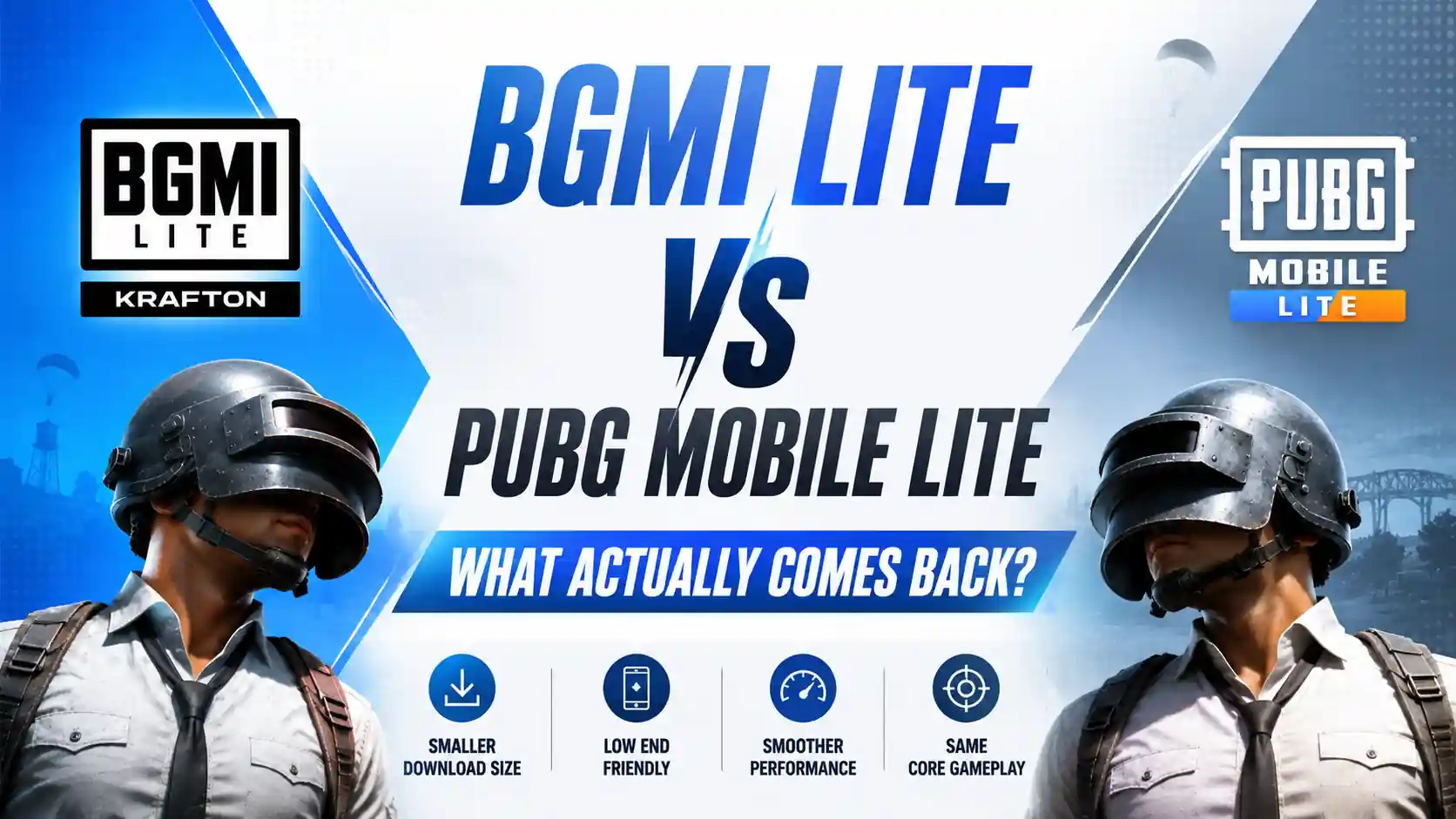
It’s important to stress that this is historical context from a different app, not a confirmed template for BGMI Lite. KRAFTON has not stated that BGMI Lite will mirror PUBG Mobile Lite’s specifications, gameplay format, or player count. Any comparison should be treated as a general reference point for what a “lite” battle royale client has looked like in the past, not a prediction of BGMI Lite’s actual requirements.
What to Actually Expect Going Forward
With the minimum GPU and RAM confirmed, here’s what’s reasonably expected as KRAFTON reveals more:
- Recommended specifications for smoother, higher-frame-rate gameplay, likely to be announced closer to launch.
- Processor and Android version requirements, which typically accompany GPU and RAM specs on a final Play Store listing.
- Confirmation of final installed storage size, once in-game resources and updates are factored in beyond the initial ~1GB download.
Bottom Line
BGMI Lite’s minimum requirements are now officially confirmed: an Adreno 306 or higher GPU and at least 1.5GB of RAM. This puts real devices within reach that could never comfortably run standard BGMI’s 2GB+ RAM requirement. Processor, Android version, and recommended specs for smoother performance are still pending — this page will be updated as KRAFTON releases those details.
This article will be updated as KRAFTON releases further official details on BGMI Lite’s system requirements.
Very very exited for the Bgmi lite 😀
Alright folks, checking out bj326game. Could be a banger, could be a bust. Only one way to find out. Gonna roll the dice! Have a look at bj326game.
So even though i have a oneplus 13 im still looking forward to this cause the normal version has so much bloatware that its becoming ass of a game. So i think that this lite version will have just the base game that everyone loves.
I also own an old iphone 6s so its great that, that phone will also run bgmi lite
Vivo Y20G me smoothly run hogi kya..?
Realme p3 mein smooth chalegi
Ahrefs Traffic candidate